
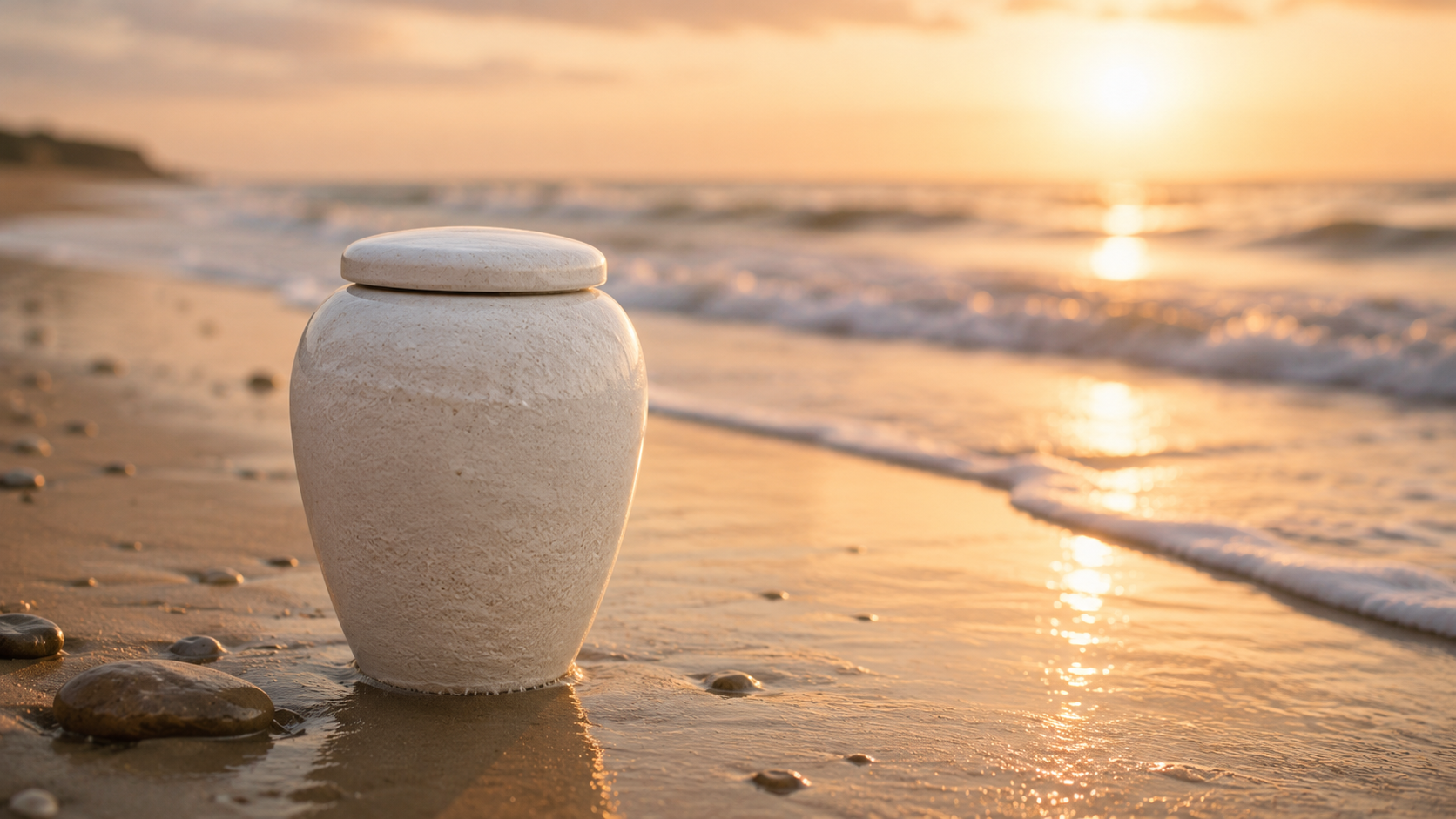
Biodegradable scattering urns: complete guide
Choosing a biodegradable urn is one of the most meaningful ways to return a loved one to the earth or sea. This guide covers the materials used, how scattering laws work across the US, UK, and Canada, and how to pick the right option for your family’s wishes.
What makes an urn biodegradable
A biodegradable urn is designed to break down naturally over time when exposed to water, soil, or sunlight, rather than remaining intact indefinitely like a traditional metal or ceramic urn. These urns are built from materials that decompose without leaving harmful residue behind, which makes them suitable for scattering ceremonies in oceans, lakes, rivers, or directly into the ground.
Common materials (salt, sand, paper, bamboo, gelatin)
Compressed salt and sand are the most common materials for water scattering urns, since both dissolve cleanly in water without affecting marine life. Recycled paper and bamboo are popular for land burial, as they break down in soil within months. Gelatin-based urns are a newer option, designed specifically for fast dissolution in fresh or saltwater.
How decomposition time varies by material
Salt-based urns typically dissolve in saltwater within two to four hours, while the same urn placed in freshwater can take up to twelve hours due to lower mineral content. Paper and bamboo urns buried in soil generally take three to six months to fully decompose, depending on soil moisture and climate.
Types of biodegradable urns
Biodegradable urns fall into three broad categories, each suited to a different kind of ceremony.
Water-soluble urns for ocean/lake scattering
These urns are built to float briefly before dissolving completely, allowing families to release them during a ceremony at sea or on a lake. Read our full guide: Water Soluble Cremation Urns: How They Work & Top Picks
Planning a full ceremony at sea? See our complete guide: Ocean Burial Urns: Rules, Costs & Ceremony Planning
Tree and seed urns for land burial
Tree urns combine ashes with soil and a tree seed, allowing a living memorial to grow over time. Read our full guide: Seed & Tree Urns: Growing a Living Memorial
Scattering tubes and biodegradable boxes
For families who prefer a simpler, more private scattering without a dissolving display, biodegradable scattering tubes and cardboard boxes offer a discreet container that breaks down in soil within a few months while making the act of scattering easier to control in windy conditions.
Related Resource
See our independently reviewed picks: Best Cremation Urns Under $100
Legal considerations before scattering
Scattering ashes is legal in most circumstances across the US, UK, and Canada, but each country sets specific rules about location, distance, and notification requirements that are easy to overlook in the moment.
US regulations (EPA, state laws)
Under the federal Marine Protection, Research, and Sanctuaries Act, ocean scattering in the US must occur at least three nautical miles from shore, and the EPA requires notification within 30 days of the scattering taking place. Individual states may add further restrictions on land scattering, particularly on public parks or protected land, so it’s worth checking local rules before planning a ceremony.
UK and Canada regulations
The UK has no specific national law banning ash scattering, though landowner permission is required for private land and certain National Trust sites have their own guidelines. Canada’s rules vary by province, with most permitting scattering on private land with owner consent and in open water away from swimming areas. See the full breakdown: Eco-Friendly Burial Laws: What’s Legal in the US, UK & Canada
Biodegradable cremation urns guide: scattering and burial options
This biodegradable cremation urns guide covers every major option available for families choosing an eco-friendly memorial — from biodegradable scattering urns designed to release ashes at sea or in the open air, to burial urns made from paper, bamboo, or salt compounds that decompose naturally in soil over weeks or months.
The right choice depends primarily on what kind of ceremony you’re planning. Scattering ceremonies call for a lightweight, easy-to-open container — either a simple scattering tube or a biodegradable box that can be gently emptied — while burial ceremonies need a sealed urn that holds together long enough to be placed in the ground intact before beginning to decompose.
How to choose the right biodegradable urn
Start by deciding where the ceremony will take place, since this determines the material you need: salt-based for ocean or lake scattering, paper or bamboo for land burial, and a seed urn if you want a lasting living memorial. Next, consider how many people will attend, since some water-soluble urns are designed to float visibly for a few minutes before dissolving, which can be a meaningful part of a group ceremony. Finally, check the urn’s capacity against the amount of ashes you have; most adult cremations produce between 180 and 240 cubic inches of remains.
FAQ
Can a biodegradable urn be used indoors before scattering?
Yes. Many families keep a biodegradable urn at home for a period of time before the scattering ceremony takes place, as long as it’s kept dry and away from direct moisture, which could trigger early dissolution.
Do I need a permit to scatter ashes?
In most cases no permit is required, though the EPA requires notification (not approval) within 30 days for ocean scattering in the US, and private landowners must give permission for scattering on their property.
How much does a biodegradable urn typically cost?
Biodegradable urns generally range from $40 to $150 depending on material and size, making them comparable in price to traditional urns while offering an eco-friendly alternative.